

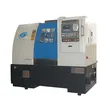
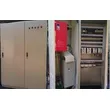
tillämpning av återkopplingsenhet PGC i CNC-maskiner
  • tillämpning av återkopplingsenhet PGC i CNC-maskiner
  • tillämpning av återkopplingsenhet PGC i CNC-maskiner
  • tillämpning av återkopplingsenhet PGC i CNC-maskiner
  • tillämpning av återkopplingsenhet PGC i CNC-maskiner

tillämpning av återkopplingsenhet PGC i CNC-maskiner

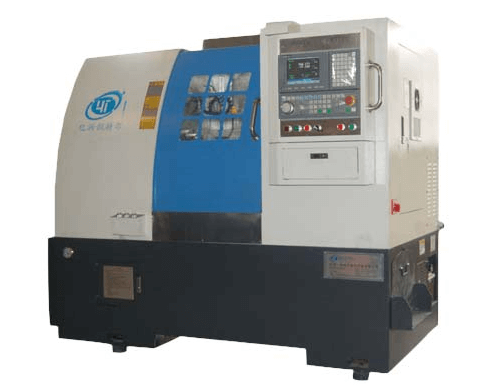
Numeriskt styrda verktygsmaskiner, förkortat CNC-verktygsmaskiner, är automatiserade verktygsmaskiner utrustade med programstyrningssystem. Detta styrsystem kan logiskt bearbeta program med styrkoder eller andra symboliska instruktioner, avkoda dem, representera dem i kodade siffror och mata in dem i numeriska styrenheter via informationsbärare. Efter beräkning och bearbetning skickas olika styrsignaler ut av den numeriska styrenheten för att styra verktygsmaskinens funktion och automatiskt bearbeta delarna enligt den form och storlek som ritningen kräver. Numeriskt styrda verktygsmaskiner har effektivt löst komplexa, precisa problem med små serier och mångsidiga delar. De är flexibla och effektiva automatiserade verktygsmaskiner som representerar utvecklingsriktningen för modern maskinstyrningsteknik och är en typisk mekatronikprodukt.

1. Egenskaper hos CNC-maskiner

(1) High processing accuracy. Numerical control machine tools process instructions given in numerical form. At present, the pulse equivalent of CNC machine tools generally reaches 0.001, and the reverse clearance of the feed transmission chain and the screw pitch error can be compensated by the CNC device. Therefore, CNC machine tools can achieve high machining accuracy. For small and medium-sized CNC machine tools, their positioning accuracy can generally reach 0.03, and the repeated positioning accuracy is 0.01.

(2) Strong adaptability to processing objects. When changing the machining parts on a CNC machine tool, it is only necessary to rewrite the program and input the new program to achieve the machining of the new parts. This provides great convenience for the production of complex single pieces, small batches, and trial production of new products. For precision and complex parts that are difficult or impossible to process with ordinary manual machine tools, CNC machine tools can also achieve automatic processing.

(3) High degree of automation and low labor intensity. The machining of parts by CNC machine tools is automatically completed according to pre programmed procedures. In addition to placing perforation belts or operating keyboards, loading and unloading workpieces, conducting intermediate inspections of key processes, and observing machine tool operation, operators do not need to perform complex repetitive manual operations. The labor intensity and tension can be greatly reduced. In addition, CNC machine tools generally have good safety protection, automatic chip removal, automatic cooling, and automatic lubrication devices, and the working conditions of operators are greatly improved.

(4) High production efficiency. The time required for part processing mainly includes two parts: maneuvering time and auxiliary time. The variation range of spindle speed and feed rate of CNC machine tools is larger than that of ordinary machine tools, so favorable cutting parameters can be selected for each process of CNC machine tools. Due to the good structural rigidity of CNC machine tools, it allows for strong cutting with large cutting amounts, which improves cutting efficiency and saves maneuvering time. Due to the fast idle motion speed of the moving parts of CNC machine tools, the clamping time and auxiliary time of the workpiece are less than those of general machine tools.

It is almost unnecessary to readjust the CNC machine tool when replacing the machined parts. So it saves time for component installation and adjustment. The machining quality of CNC machine tools is stable, usually only conducting first piece inspection and sampling inspection of key dimensions between processes, thus saving downtime for inspection. When machining in a machining center, a machine tool achieves continuous processing of multiple processes, resulting in a more significant improvement in production efficiency.

(5) The economic benefits are good. Although CNC machine tools are expensive and require high equipment depreciation costs for each part during processing, in the case of single piece and small batch production, using CNC machine tools can save marking time, reduce adjustment, processing, and inspection time, and save direct production costs; ② Using CNC machine tools to process parts generally does not require the production of specialized fixtures, saving process equipment costs; ③ The stable precision of CNC machining reduces the scrap rate and further lowers production costs; ④ Numerical control machine tools can achieve multi-purpose use, save factory space, and save construction investment. Therefore, using CNC machine tools can still achieve good economic benefits.

2. The application of CNC machine tools has many advantages that ordinary machine tools do not possess. Its application scope is constantly expanding, but it cannot completely replace ordinary machine tools, nor can it solve all problems in mechanical processing in an economical way Numerical control machine tools are suitable for processing parts with the following characteristics:

(1) Parts produced in multiple varieties and small batches.

(2) Parts with complex shapes and structures.

(3) Parts that require frequent modifications.

(4) Expensive and non scrap critical components.

(5) Urgent parts with short design and manufacturing cycles.

(6) Parts with large batch size and high precision requirements.


Two Numerical Control Machine Tool Renovation Plan


1. Equipment Overview

The main parameters of the energy-saving transformation machine tool in Zhongshan Liqiong CNC Processing Factory are as follows:

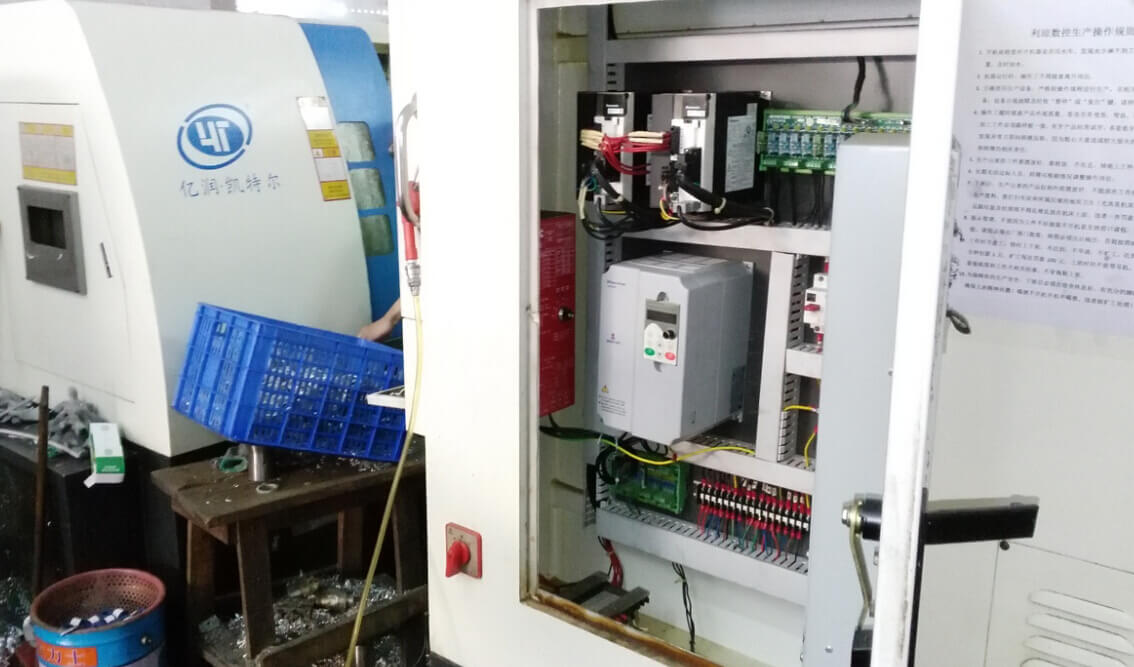
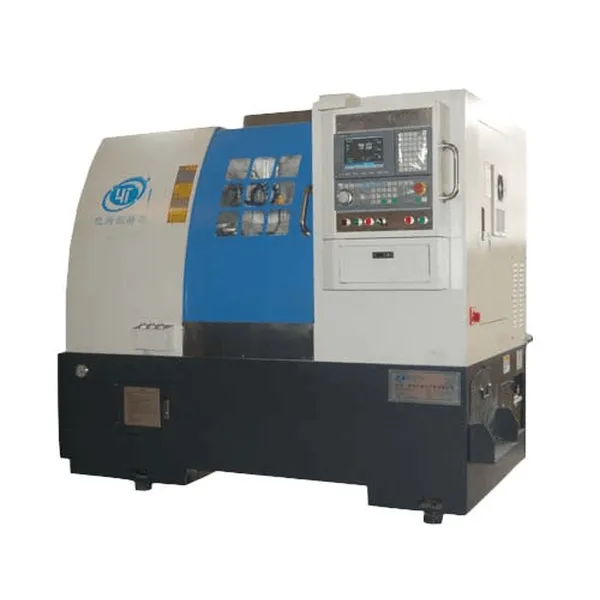
(1) Machine tool brand: Yirun Keitel Model: YRX-46A Machine Tool Spindle Power: 7.5KW

(2) Operating cycle 5 seconds, braking time 1 second, braking current 12A

(3) Power supply: 380V 50HZ


2. Processing of Regenerated Electric Energy

When a CNC machine completes an action or ends a work cycle, the machine's motor will be in a regenerative power generation state. The six diodes in the inverter convert the mechanical energy of the transmission mechanism into electrical energy and feed it back to the intermediate DC circuit, causing an increase in voltage across the energy storage capacitor. If necessary measures are not taken, the frequency converter will trip due to overvoltage when the DC circuit capacitor voltage rises to the protection limit. In high-performance engineering inverters, there are two solutions for processing continuous regenerated electrical energy: ① setting resistors in the middle DC circuit to allow the continuous regenerated electrical energy to be consumed in the form of heat through the resistors, which is called energy consumption braking; ② The use of regenerative rectifiers to transmit continuously regenerated electrical energy back to the grid is called feedback braking.

(1) Energy consumption braking is composed of a braking unit and a braking resistor.

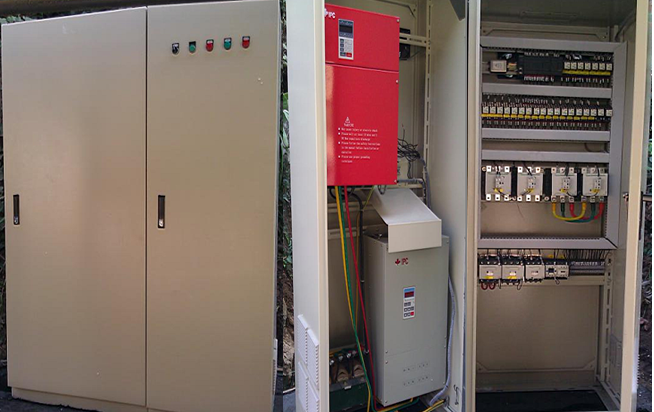
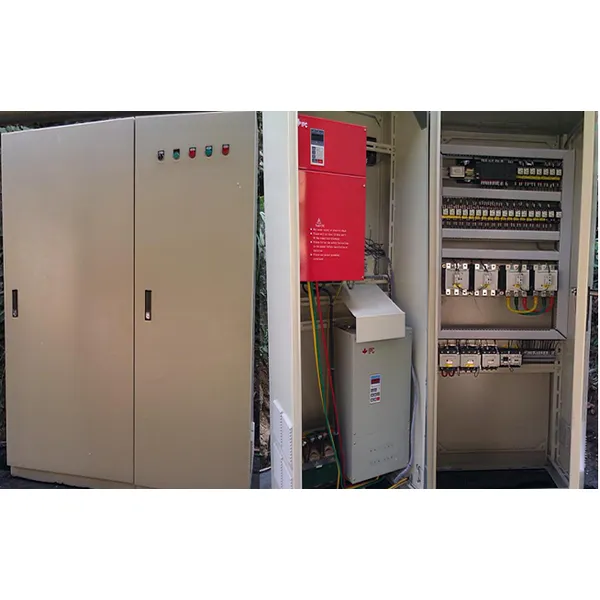
(2) In order to achieve the feedback of regenerative power generated by the braking state of the electric motor to the grid, the grid side inverter should use a reversible inverter. The IPC-PGC sine wave energy-saving feedback device launched by Jianeng Company has the same structure as the grid side converter and inverter, using a grid voltage recognition board with PWM control mode. Due to the use of PWM control technology, the magnitude and phase of the AC voltage on the grid side can be controlled, which can make the AC input current in phase with the grid voltage and approach a sine wave. The power factor of the transmission system is greater than 0.96, and it has 100% grid feedback capability during feedback braking without the need for an autotransformer.

The IPC-PGC sine wave energy-saving feedback device can feed back the regenerated electrical energy generated during motor speed regulation and other processes to the power grid, avoiding energy loss caused by resistance heating using conventional energy consuming braking units, thus achieving ideal energy-saving effects and efficient operation.


{p_detail_description}

The power consumption of CNC machine tools is directly determined by the motor power of the machine tool and the continuous running time of the machine tool, while the continuous running time of CNC machine tools is determined by the operating conditions of the machine tool, namely start stop frequency, acceleration time, processing time, and shutdown time. Therefore, we calculate power consumption based on the power, operating time, and operating condition coefficient of the CNC machine tool.

3、 Product Introduction of IPC-PGC Sine Wave Energy saving Feedback Device


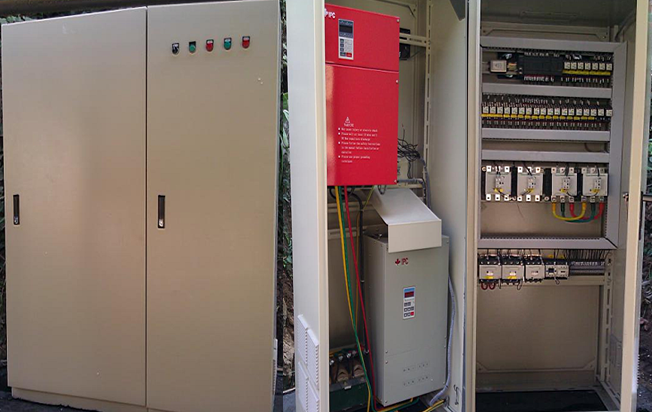
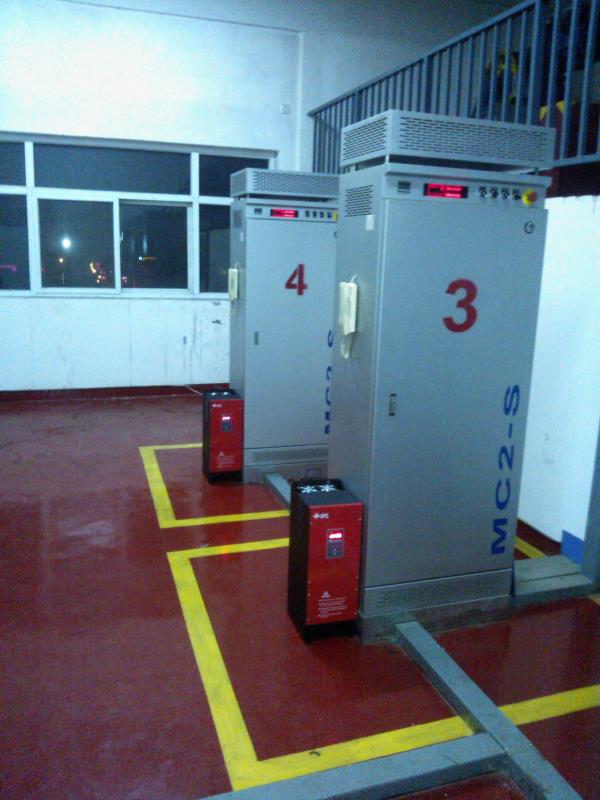
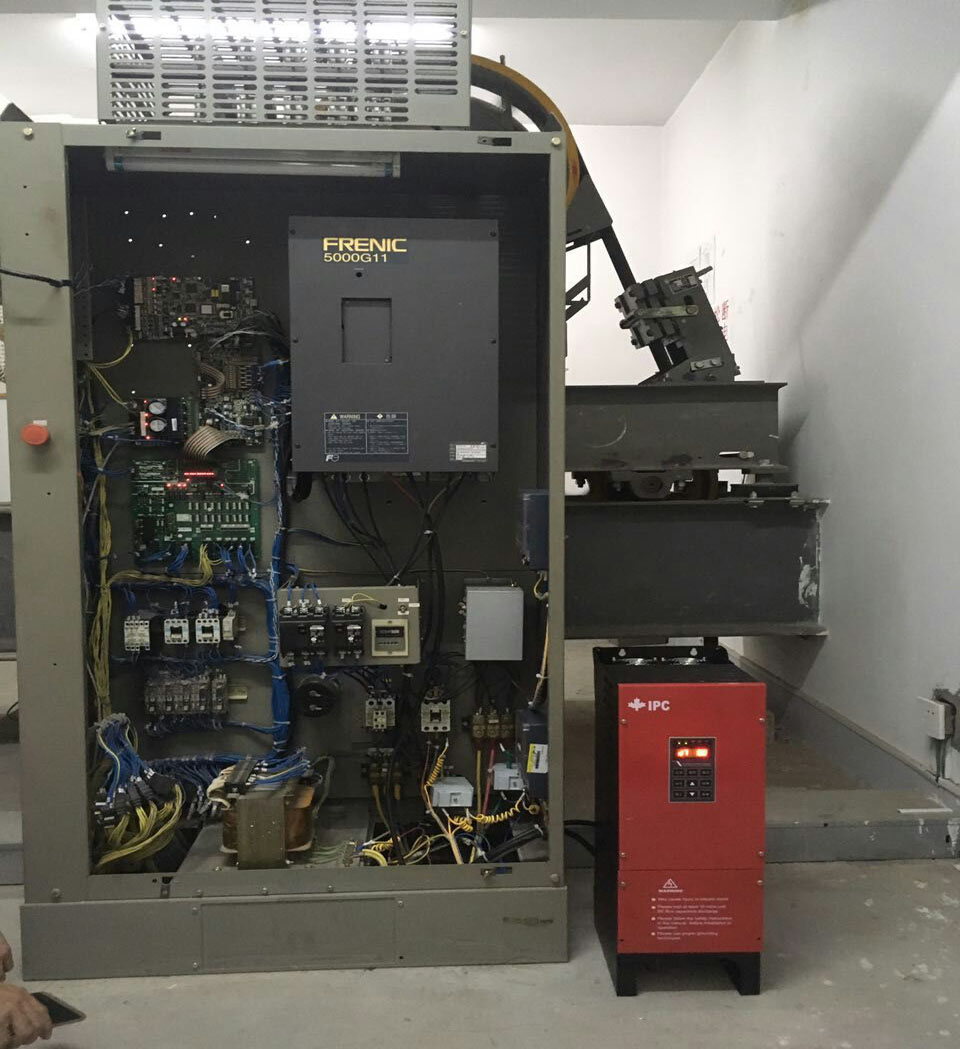
The IPC-PGC sine wave energy-saving feedback device is a low-noise energy-saving product manufactured using Canadian technology, which uses advanced algorithms to achieve complete sine wave energy feedback. It can feed back the regenerated electrical energy generated during the motor speed regulation process to the power grid, avoiding energy loss caused by conventional energy consuming braking units and achieving energy-saving effects. The PGC sine wave energy-saving feedback device product is equipped with reactors and noise filters inside, which can be directly connected to the power grid without causing interference to the power grid and surrounding electrical equipment.

At present, it has been widely used in CNC machine tools, servo control systems and other occasions.

When the spindle of a CNC machine tool or servo control system brakes rapidly, the electric motor will be in a regenerative power generation state. The six diodes in the inverter convert the mechanical energy of the transmission mechanism into electrical energy and feed it back to the intermediate DC circuit, causing an increase in voltage across the energy storage capacitor. In order to achieve the feedback of regenerative electric energy from the braking state of the motor to the grid, the grid side inverter should adopt a reversible inverter. The IPC-PGC energy feedback device launched by Jianeng Company adopts a grid voltage recognition board with PWM control mode. Due to the use of PWM control technology, the magnitude and phase of the AC voltage on the grid side can be controlled, which can make the AC input current in phase with the grid voltage and approach a sine wave. The power factor of the transmission system is greater than 0.96, and it has 100% grid feedback capability during feedback braking without the need for an autotransformer.

The IPC-PGC electric energy feedback device can feed back the regenerated electric energy generated during motor speed regulation and other processes to the power grid, avoiding energy loss caused by resistance heating using conventional energy consuming braking units, thus achieving ideal energy-saving effects and efficient operation.

When the motor is operating in a generating state, the electrical energy generated by the motor flows back to the DC bus through the diode on the inverter side. When the DC bus voltage exceeds a certain value, the IPC-PGC electrical energy feedback device will start, reversing the DC to AC, and feeding back the electrical energy to the grid by controlling the voltage phase and amplitude of the electrical energy feedback device, achieving the goal of energy conservation.

The main technical features of IPC-PGC sine wave energy-saving feedback device are:

Technical Indicators:

Maximum mechanical energy recovery power: 12KW

Mechanical energy conversion efficiency: 70% -95%

Power quality: Pure sine wave, THD<5% @ 100% load

Response time: 10ms (0.01 seconds)

Compatible motors: spindle motor system, servo motor system

Maximum downtime: 0.3 seconds

Normal downtime: 1-4 seconds

Suitable voltage: 360V-460V, 50/60HZ, three-phase

Safety and Electromagnetic Compatibility Standards: EN50178-1997 EN12015-2004 EN12016-2004 EN61000

4 built-in reactors and filters, plug and play

PGC adopts an integrated structural design, with built-in reactors and filters, so users do not need to purchase separately

5 completely replace resistance braking

PGC can completely replace resistance braking, turning energy consuming components into faulty ones and saving over 60% of installation space.

6. Easy to operate, reducing installation and training costs

Innan varje PGC-produkt lämnar fabriken har den redan ställts in med tekniska parametrar som uppfyller över 90 % av kraven, vilket gör den enkel att använda. Samtidigt, för att möta komplexa arbetsförhållanden, behöver användarna bara justera åtgärdströskeln för att säkerställa 100 % användning. Därför kan du snabbt komma igång med att använda PGC, även om du inte är en teknisk expert.

7. Använd globala nätfrekvenser utan geografiska begränsningar för applikationer

PGC-produktens THD uppfyller globala filtreringsstandarder; EMC/EMI uppfyller den stränga EN55022 klass A-standarden; Den kan fungera stabilt vid nätfrekvenser från 45 Hz till 65 Hz. Därför är tillämpningen av PGC-produkter helt obegränsad av geografiska begränsningar.